Web3 is one of those words that people use often without explaining properly. Some people describe it as cryptocurrency. Others call it the next internet. Some connect it only to NFTs, trading or making money online. These descriptions touch on parts of Web3, but none of them explain the whole idea.
Web3 is a broad direction for building internet services with blockchain technology. Its main idea is that users should be able to own digital assets, interact through shared networks and sometimes use applications without depending completely on one company to control the records, rules or access.
That does not mean every Web3 product is fully decentralised. It also does not mean that Web3 will replace every normal website. Web3 is still developing, and many products combine traditional internet systems with blockchain systems. Understanding this mixture is more useful than treating Web3 as magic or dismissing it as only hype.
This guide explains what Web3 actually means, how it differs from earlier versions of the internet, the technologies behind it, what people use it for, and the problems it is still trying to solve.

Start With the Internet, You Already Know
To understand Web3, it helps to look at how people describe the earlier stages of the internet. Web1, Web2 and Web3 are not official software versions released on fixed dates. They are labels used to describe broad changes in how the internet works and how people use it.
Stage | What users mainly do | Who usually controls the platform and data |
|---|---|---|
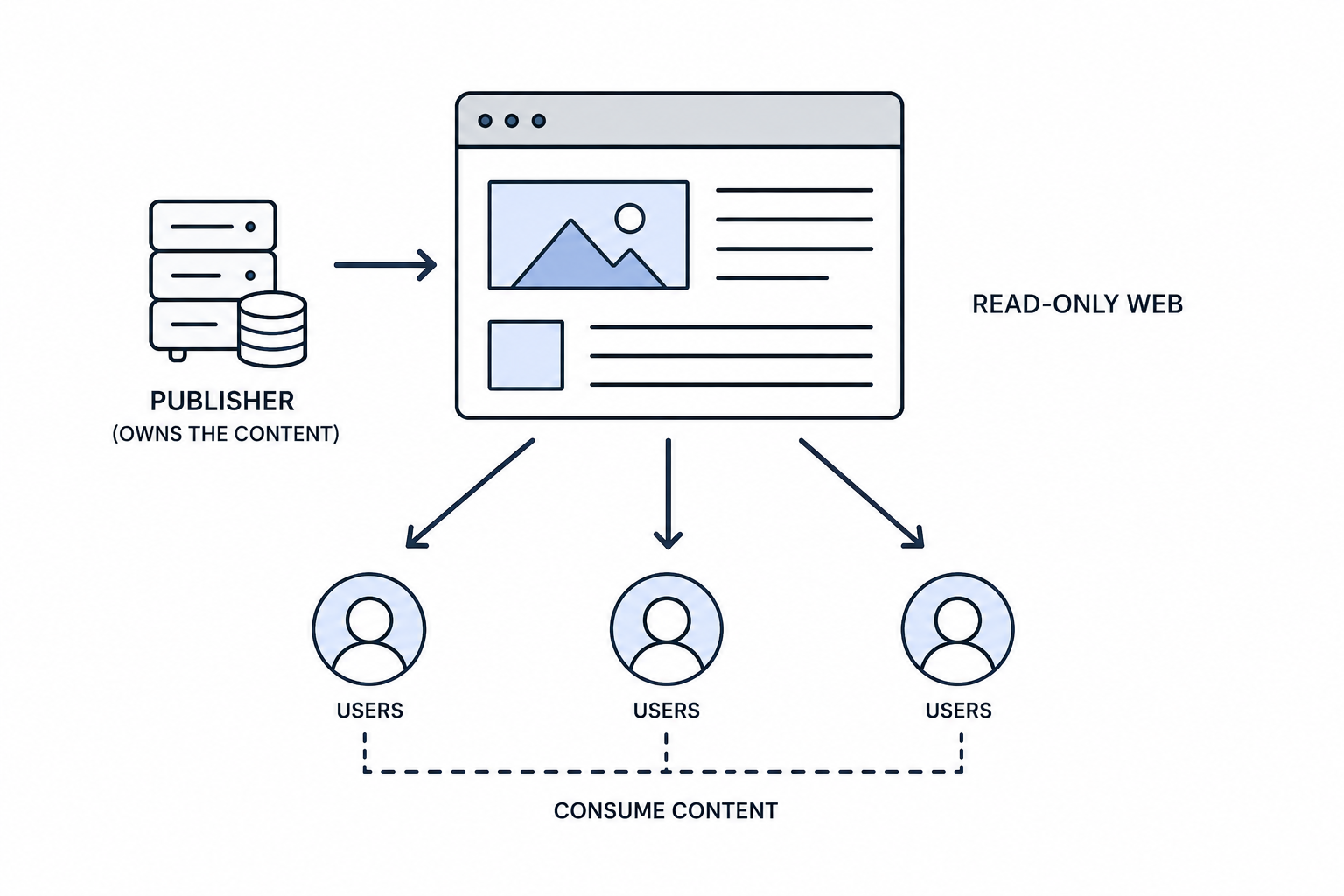
Web1 | Read mostly static pages. A small number of publishers create most of the content. | Website owners control the pages and servers. |
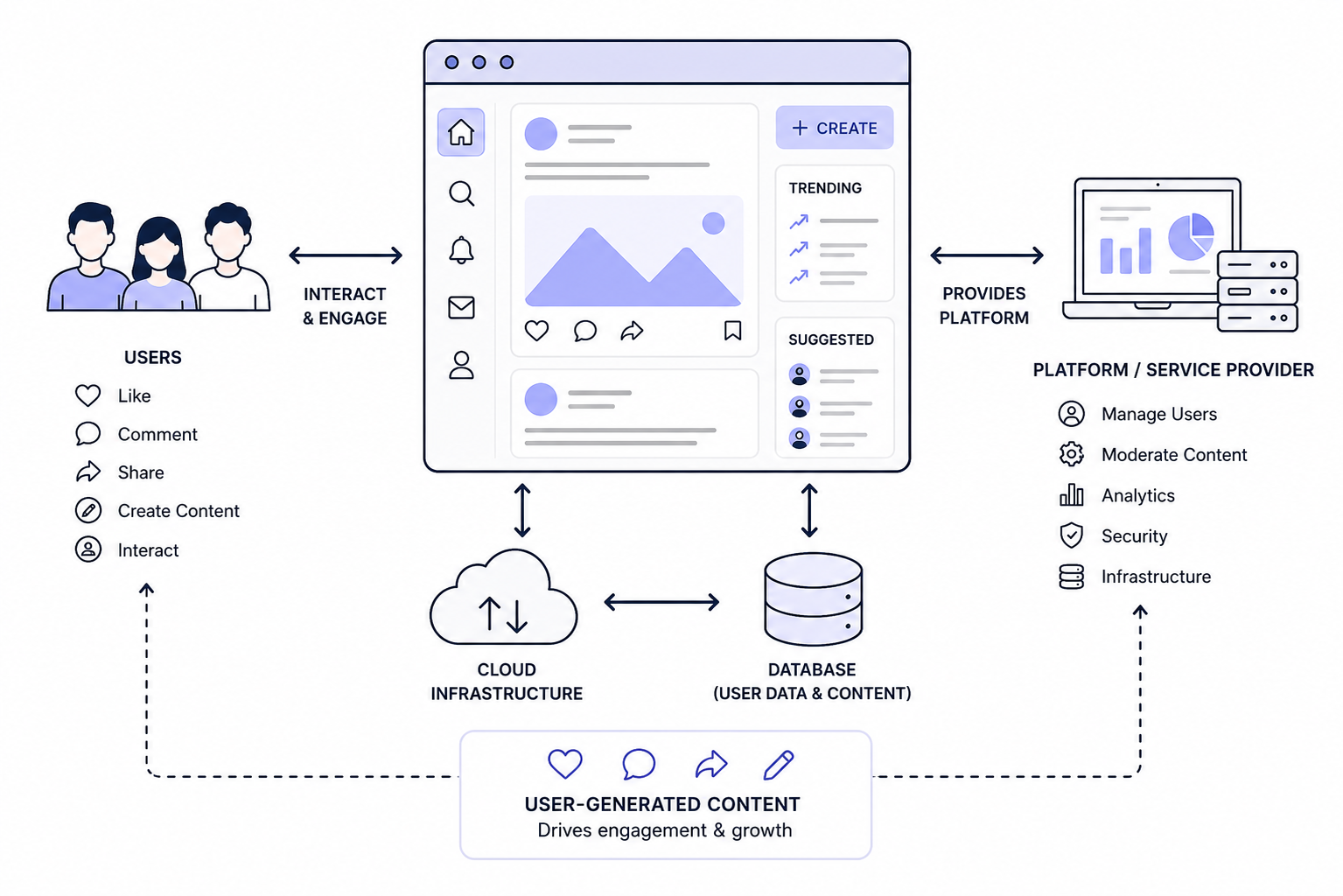
Web2 | Read, create, comment, share, buy, sell and build communities. | Large platforms usually control accounts, databases, rules and distribution. |
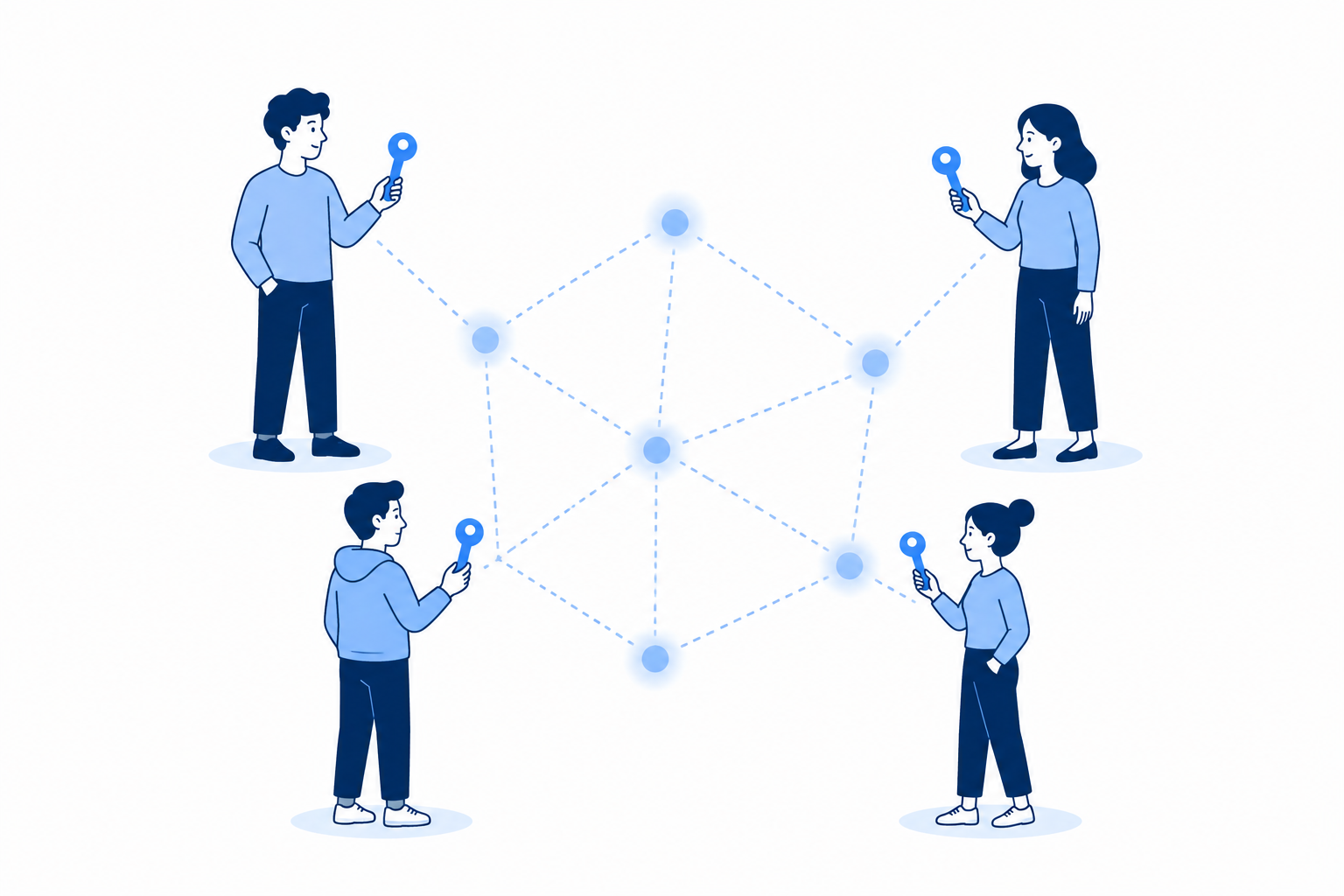
Web3 | Use applications that may connect to wallets, blockchains, tokens and shared protocols. | Control can be divided among companies, developers, network participants, token holders and users. |
Web1
Early websites were mainly places to read information. A company, school or individual published a page, and visitors consumed it. Interaction was limited. You might read a news page or company profile, but you usually cannot create a profile, upload a video or build a business directly inside the platform.
Web2
Web2 made the internet interactive. People could create accounts, publish content, message friends, sell products and use online services. Social media, cloud software, streaming platforms and modern marketplaces grew from this model.
The trade-off is that the company running the platform normally controls the database and the account. It can decide what is allowed, change how content is distributed, close an account or prevent one platform’s digital items from moving to another platform. This central control can make products faster and easier to manage, but it also gives the platform significant power.
Web3
Web3 introduces shared blockchain networks and user-controlled wallets into this picture. Instead of every important record living only in one company’s private database, some records can be written to a blockchain that many independent computers verify.
A user may sign in with a wallet rather than create a new password for every application. The same wallet can hold assets and interact with different applications. A smart contract can apply public rules without waiting for a company employee to approve each transaction.
The Main Idea Is Shared Control
The word most closely connected to Web3 is decentralisation. Decentralisation means that control or verification is distributed instead of being placed entirely in one central organisation. It is not an all-or-nothing condition. A system can be decentralised in one part and centralised in another.
For example, a token may exist on a decentralised blockchain, while the website used to access it is operated by one company. The blockchain records may be public, while the development team controls which features appear in the application. A community may vote on some decisions, while a small team manages daily operations.
Centralised and decentralised systems
Question | Centralised service | More decentralised service |
|---|---|---|
Who stores the main record? | One organisation controls the primary database. | Many network participants keep and verify the shared record. |
Who approves actions? | The organisation and its internal systems. | Network rules and smart contracts may approve valid actions. |
Can one party change the rules? | Often yes, subject to law, contracts and company policy. | Changes may require agreement across developers, validators, users or governance participants. |
What happens if one server fails? | The service may become unavailable unless the company has backups. | The network can continue if enough independent participants remain active. |
Is it always better? | It can be faster, simpler and easier to support. | It can improve openness and resilience but may be slower, costly or difficult to govern. |
The goal is not to decentralise every button and customer-service decision. The useful question is: which parts of this system should one company control, and which parts benefit from shared verification or user ownership?
Blockchain is the record-keeping layer
A blockchain is a digital record shared across a network. Transactions are grouped, ordered and added to the record according to the network’s rules. Participants can check the history without relying on one private database as the only source of truth.
Different blockchains make different choices. Some prioritise strong decentralisation and security. Others prioritise faster transactions or lower fees. They may use different programming tools, fee systems and methods for agreeing on valid transactions.
A payment example
Suppose Ada sends a digital asset to Chidi. Ada’s wallet prepares the transaction and signs it with her private key. The network checks that the signature is valid and that Ada has the asset she wants to send. If the transaction follows the rules, the network confirms it and updates the shared record. Chidi’s wallet can then display the new balance. |
The blockchain does not need to know Ada and Chidi personally. It verifies addresses, signatures, balances and network rules. This is useful, but it also means that mistakes may be difficult or impossible to reverse. Sending to the wrong address is not the same as making a bank transfer that customer support may be able to recall.
Public does not always mean personally identified
Many blockchains allow anyone to view transaction addresses and amounts. The addresses appear as long strings rather than ordinary names. This is often described as pseudonymous, not completely anonymous. If an address becomes connected to a person, business or exchange account, its public transaction history may reveal more than the user expected.
Wallets Give Users Access and Responsibility
A Web3 wallet is a tool for managing the keys used to control blockchain accounts. The assets are recorded on the blockchain; the wallet helps the user view them, sign actions and interact with applications.
The four wallet ideas a beginner must understand
Item | What it means | What the user should do |
|---|---|---|
Wallet address | A public destination that can receive compatible assets. | Check every character or use a trusted QR code. Confirm the network. |
Private key | Secret information that proves control of an address. | Never share it or enter it into an untrusted website. |
Seed phrase | A recovery phrase that can restore control of a wallet. | Keep it offline and private. Anyone who gets it may control the wallet. |
Wallet signature | Approval is created by the wallet to authorise a message or transaction. | Read what you are approving. Reject anything you do not understand. |
Custodial and self-custody wallets
With a custodial wallet, a company holds or manages the keys on the user’s behalf. The experience may feel similar to a normal financial application. The company may help with account recovery, but the user depends on that company’s security, rules and access decisions.
With a self-custody wallet, the user controls the keys directly. This provides more control, but it also places more responsibility on the user. If the recovery information is lost or stolen, there may be no help desk capable of restoring the assets.
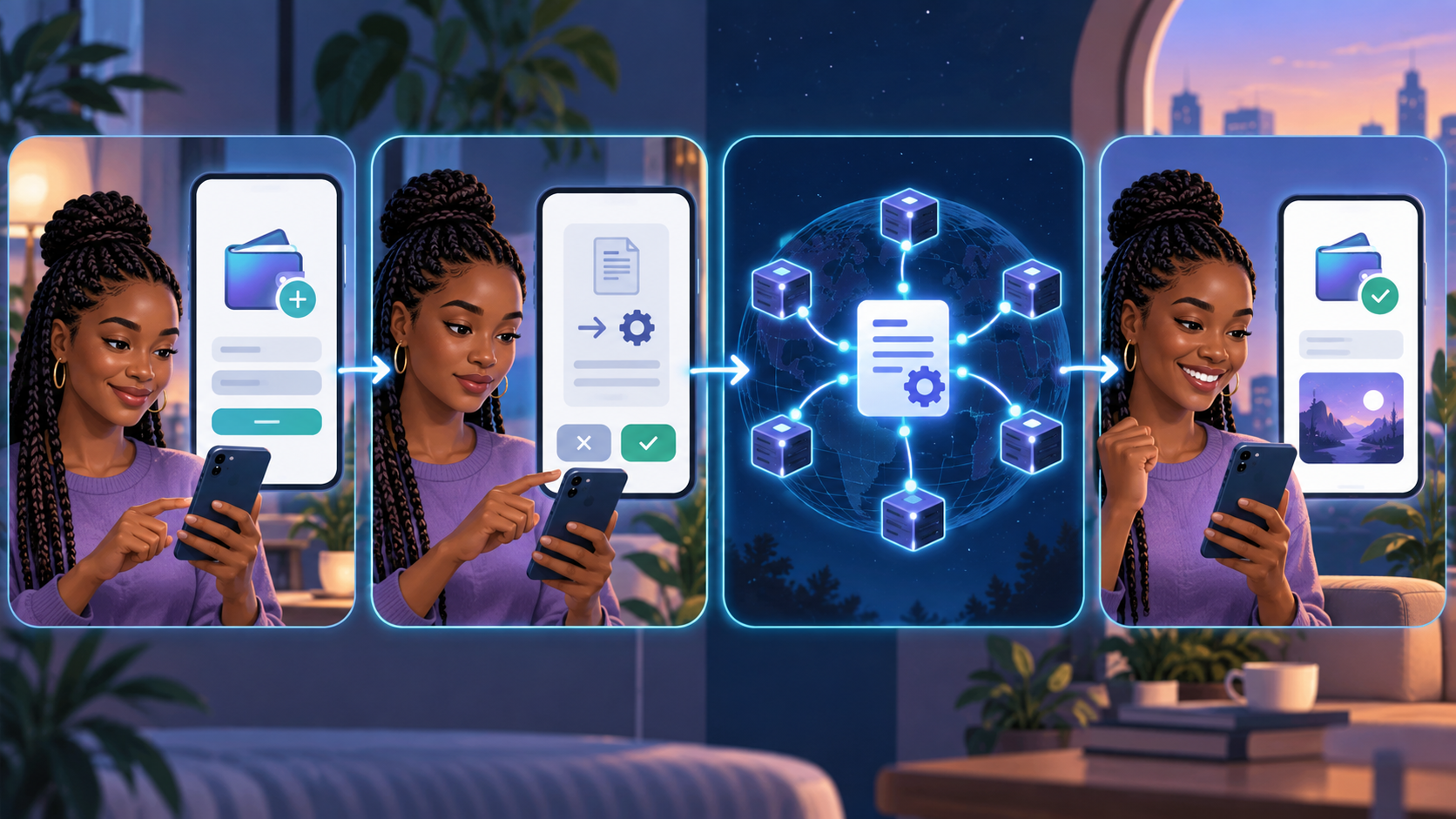
A common Web3 interaction: connect a wallet, review and approve an action, let the smart contract and network process it, then view the result.
Smart Contracts Make Blockchains Programmable
A smart contract is code stored and executed on a blockchain. It contains rules for what can happen. When someone sends a valid request, the network executes the code and records the result.
The word “smart” can be misleading. A smart contract does not think, understand intention or correct every mistake. It follows its programmed rules. If the code contains a weakness, attackers may exploit it. If a user approves the wrong action, the contract may execute that action exactly as written.
A vending machine
For example, you select an item and insert the required payment. If the conditions are met, the machine releases the item. A smart contract can work in a similar way: it receives an instruction, checks conditions and produces a defined result. |
The difference is that the smart contract operates digitally across a blockchain network.
What smart contracts can support?
Swapping one digital asset for another.
Lending assets according to programmed conditions.
Creating and transferring digital collectibles.
Distributing funds when agreed conditions are met.
Recording votes in an online governance process.
Managing access to a digital community or service.
Tokens Represent Value, Rights, or Access
A token is a digital unit created and managed using a blockchain. Tokens can be designed for different purposes, so the word token does not tell you whether something is valuable, safe or useful.
Get new Decode Web3 posts in your inbox.
Add any other topics you want to receive.
Type | Possible purpose | Important caution |
|---|---|---|
Network coin | Pays network fees and may help secure the blockchain. | Its price can change sharply. |
Stablecoin | Attempts to maintain a stable value, often linked to a national currency. | The design, reserves, issuer and regulation matter. |
Utility or access token | Provides access, discounts or functions within a product. | Demand may disappear if the product has no real use. |
Governance token | May allow holders to vote on certain protocol decisions. | Voting power may be concentrated among a few holders. |
NFT | Represents a distinct token that may connect to art, membership, tickets or game items. | Owning the token does not automatically transfer copyright or every legal right. |
A token is a technical structure, not a promise of profit. Before using or buying one, a person should understand who created it, what rights it provides, whether those rights can be enforced, how the supply works and what risks exist.
Decentralised Applications Connect the Pieces
A decentralised application, usually called a dApp, is an application that interacts with a blockchain or smart contracts. The website or mobile interface may look like a normal application. The difference is that some important actions take place through a wallet and a blockchain network.
What happens when a user interacts with a dApp
The user opens the application and connects a compatible wallet.
The application reads the public wallet address and relevant blockchain data.
The user chooses an action, such as swapping an asset or claiming a membership token.
The wallet displays a request showing what will be signed and any network fee.
The user approves or rejects the request.
The smart contract and blockchain network process a valid, approved transaction.
The application reads the updated blockchain record and displays the result.
Not every interaction requires payment or a blockchain transaction. A dApp can read public information without changing the blockchain. Actions that change blockchain state usually require a signed transaction and may require a network fee.
What People Use Web3 For
Use | Example | What Web3 changes |
|---|---|---|
Payments | A freelancer receives a stablecoin from an overseas client. | The transfer can settle through a blockchain network without both people using the same bank. |
Decentralised finance | A user swaps assets through a liquidity protocol. | Smart contracts apply the transaction rules instead of a traditional broker handling each trade. |
Digital ownership | A game item or membership token sits in a user’s wallet. | The asset can be verified and may be usable outside one company's database. |
Creator support | Supporters fund a project or hold access tokens. | Creators can coordinate ownership, access or payments using blockchain tools. |
Identity and credentials | A learner receives a verifiable digital certificate. | Another party may verify the record without contacting the original database manually. |
Community governance | Members submit proposals and vote on certain decisions. | Rules and voting records may be visible and executed through shared systems. |
Supply and records | Organisations record checkpoints for goods or documents. | Participants can share a tamper-evident history across organisations. |
Web3 is most useful when several people or organisations need to coordinate around a shared digital record but do not want one participant to have complete control. If one trusted organisation can solve the problem more cheaply and safely, a normal database may still be the better choice.
What Web3 Does Not Mean
Web3 is not the same as cryptocurrency trading. Trading is one activity. Web3 also includes applications, infrastructure, communities, payments, identity, gaming and digital ownership.
Web3 does not guarantee decentralisation. A project may use blockchain language while one team controls the product, keys, website or the majority of tokens.
Web3 does not remove trust completely. Users may still trust developers, wallet software, auditors, token issuers, data providers and interfaces.
Blockchain does not make false information true. A blockchain can preserve a record, but it cannot automatically prove that information entered from the real world was correct.
A token does not create value by itself. Real value depends on usefulness, demand, rights, security and the people or systems supporting it.
Web3 is not automatically private. Public blockchain activity can be visible permanently and may later be linked to real identities.
The Limitations and Trade-offs
Web3 solves some problems while creating new ones. A balanced understanding includes both sides.
Potential benefit | Related trade-off |
|---|---|
Users can control assets directly. | Users can also lose assets through stolen keys, wrong addresses or harmful approvals. |
Public records can improve verification. | Public activity may reduce privacy and preserve mistakes permanently. |
Open networks can allow anyone to build. | Users must judge many unfamiliar products and malicious copies. |
Smart contracts can automate rules. | Programming errors can create serious losses. |
Networks can operate across borders. | Legal, tax and consumer-protection rules differ by country. |
Community governance can distribute decisions. | Participation may be low, slow or dominated by large token holders. |
Assets may move between applications. | Different networks and technical standards can confuse beginners. |
Other concerns include transaction costs, network congestion, difficult user interfaces, energy use on some networks, uncertain regulation, scams and limited customer support. Strong Web3 products work to reduce these problems instead of pretending they do not exist.
How to Explore Web3 Safely
A beginner should learn through low-risk observation and small tests. Do not begin by buying an unfamiliar token or connecting a wallet to random websites.
Learn the basic terms: blockchain, wallet, address, private key, seed phrase, gas fee, smart contract and token.
Open a reputable blockchain explorer and observe a public transaction. Identify the status, network fee, sending address and receiving address.
Read the official documentation of one established wallet. Learn how recovery and transaction approval work before creating anything.
If you create a practice wallet, keep it separate from any wallet holding valuable assets.
Use a recognised test network or a very small amount only when practical action is necessary.
Verify website addresses through official sources. Bookmark trusted pages instead of depending on advertisements or private-message links.
Read every wallet request. Do not sign because someone says it is urgent.
Remember that no genuine support worker needs your seed phrase or private key.
A safe observation exercise
Choose a public blockchain explorer from an official network website. Search for a recent transaction already visible on the explorer. Without sending money or connecting a wallet, identify the transaction hash, status, block number, sending address, receiving address, amount and fee. Write one sentence explaining each item. This gives you practical understanding without placing funds at risk.
In Summary
Web3 is an approach to building internet products with blockchains, wallets, smart contracts and digital assets so that users and network participants can share control, verify records and own or move certain digital items.
The definition has four important parts:
It is still the internet. People use websites, applications and phones as they do today.
Blockchain provides a shared record that does not belong only to one private database.
Wallets give users a way to control accounts and approve actions.
Smart contracts and tokens allow applications to manage programmable actions, value, access or ownership.
Web3 is not one website, one blockchain or one company. It is a collection of technologies, products and ideas. Some parts are already useful. Some remain experimental. The best way to understand it is to examine the specific problem a product solves, which parts are truly decentralised, what the user controls and what risks remain.
Final Checklist
Final Thoughts
Web3 actually means using blockchain-based systems to change how some internet records, assets and rules are controlled. It gives users new ways to hold digital assets, approve actions and interact with applications across shared networks.
Its value is not that everything becomes decentralised or that every token increases in price. Its value appears when shared verification, programmable ownership or reduced dependence on one central organisation solves a real problem better than the available alternatives.
Vocabulary
Term | Meaning |
|---|---|
Web3 | Internet products and systems that use blockchains, wallets, smart contracts and digital assets. |
Decentralisation | Distributing control or verification instead of giving one organisation complete authority. |
Blockchain | A shared digital record maintained according to network rules. |
Wallet | A tool that manages keys and helps a user interact with blockchain accounts. |
Wallet address | A public destination used to identify a blockchain account. |
Private key | Secret information used to prove control and authorise blockchain actions. |
Seed phrase | Sensitive recovery words that can restore a wallet and must never be shared. |
Smart contract | Code on a blockchain that applies programmed rules. |
Token | A digital unit created and managed through a blockchain. |
dApp | An application that interacts with a blockchain or smart contracts. |
Gas fee | A network fee paid to process a blockchain action. |
Protocol | A set of rules and smart contracts that support a blockchain product. |
On-chain | Recorded or performed on a blockchain. |
DAO | A blockchain-oriented organisation or community that may use shared governance. |
Join the conversation
What stayed with you? Leave a thought or a question. Comments appear after approval.
Loading comments…