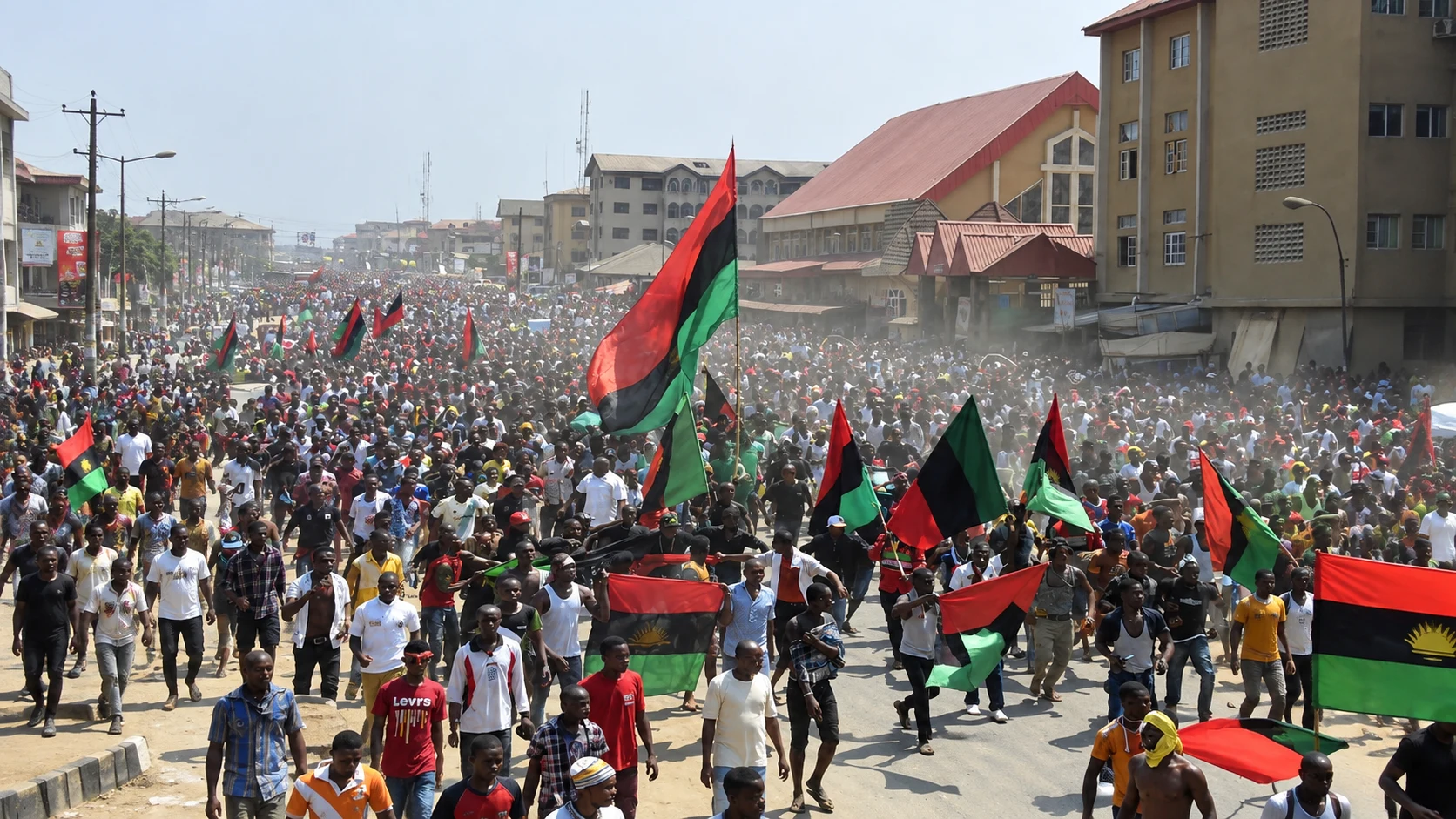
There is a narrative that has become very common in Nigeria when you talk about Biafra, and someone immediately says terrorism. Talk about Biafran, and some people immediately think of violence, guns, killings and destruction.
But before we accept that description, we need to ask a very simple question.
How did the Biafran movement become a terrorist movement?
Because history is not as simple as the label makes it sound. The idea of Biafra was never about people walking around looking for people to kill.
And the desire for Biafran self-determination was never a criminal enterprise.
There is a difference between a people demanding self-determination, a political movement campaigning for that demand, a historical state that fought a civil war, and an organization that is later accused of committing acts of violence.
Those things are not automatically the same thing.
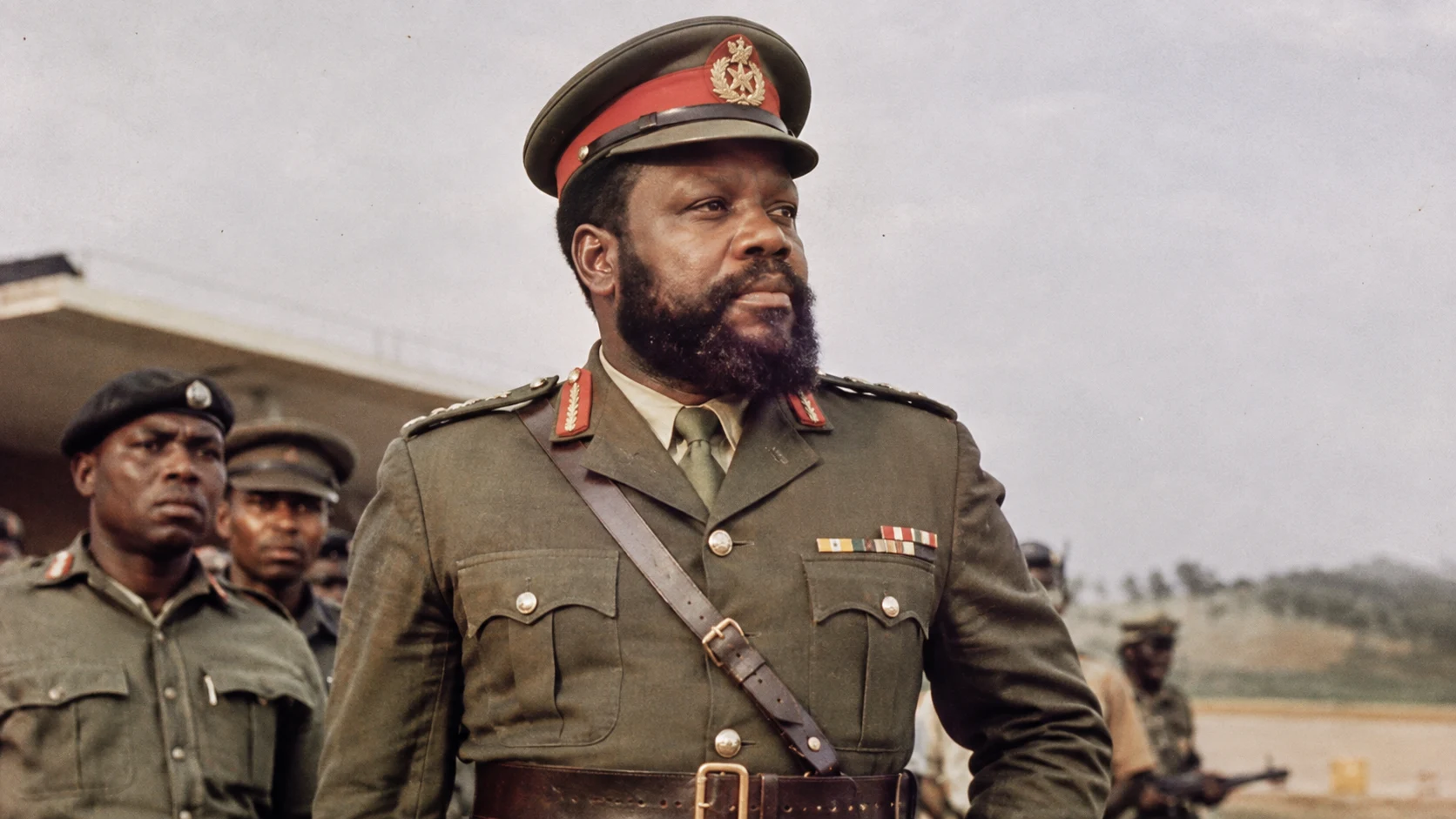
The historical Republic of Biafra existed from 1967 until 1970. It emerged from the political crisis, massacres, displacement and breakdown of relations between the Eastern Region and the Federal Government of Nigeria.
On 30 May 1967, Chukwuemeka Odumegwu Ojukwu declared the independence of the Republic of Biafra. What followed was a civil war between the Federal Military Government and Biafra.
The Modern Biafra
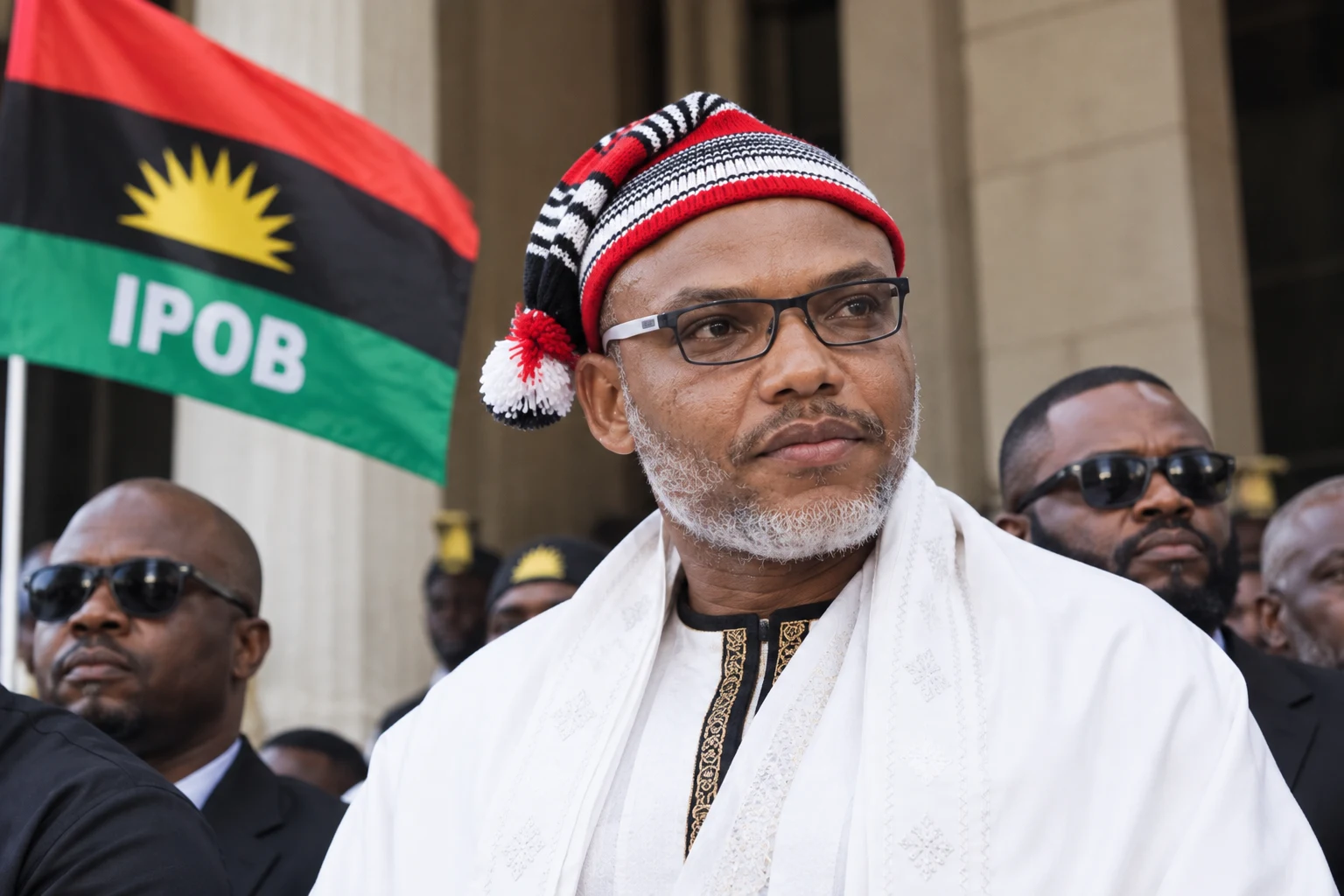
One of the major organizations that emerged in the modern period was the Indigenous People of Biafra, IPOB, founded in 2012 and associated with Nnamdi Kanu. IPOB describes itself as a self-determination movement seeking the restoration of an independent Biafran state.
And this is where the story becomes complicated.
Before IPOB was proscribed by the Nigerian government, there were years of demonstrations, marches, meetings and public gatherings by people demanding Biafran self-determination.
And a lot of those gatherings were peaceful.
So when we talk about the story of the modern Biafran movement, we cannot begin at the point where the government called IPOB a terrorist organization.
We have to go backwards.
We have to ask what happened before the label.
What were these people doing?
What were they demanding?
How did the government respond?
And how did a movement that publicly presented itself as a movement for self-determination become associated with terrorism and armed violence?
Before the Label Came the Crackdown
Before IPOB became the organization Nigerians know today, there was already a history of Biafran self-determination movements in southeastern Nigeria.
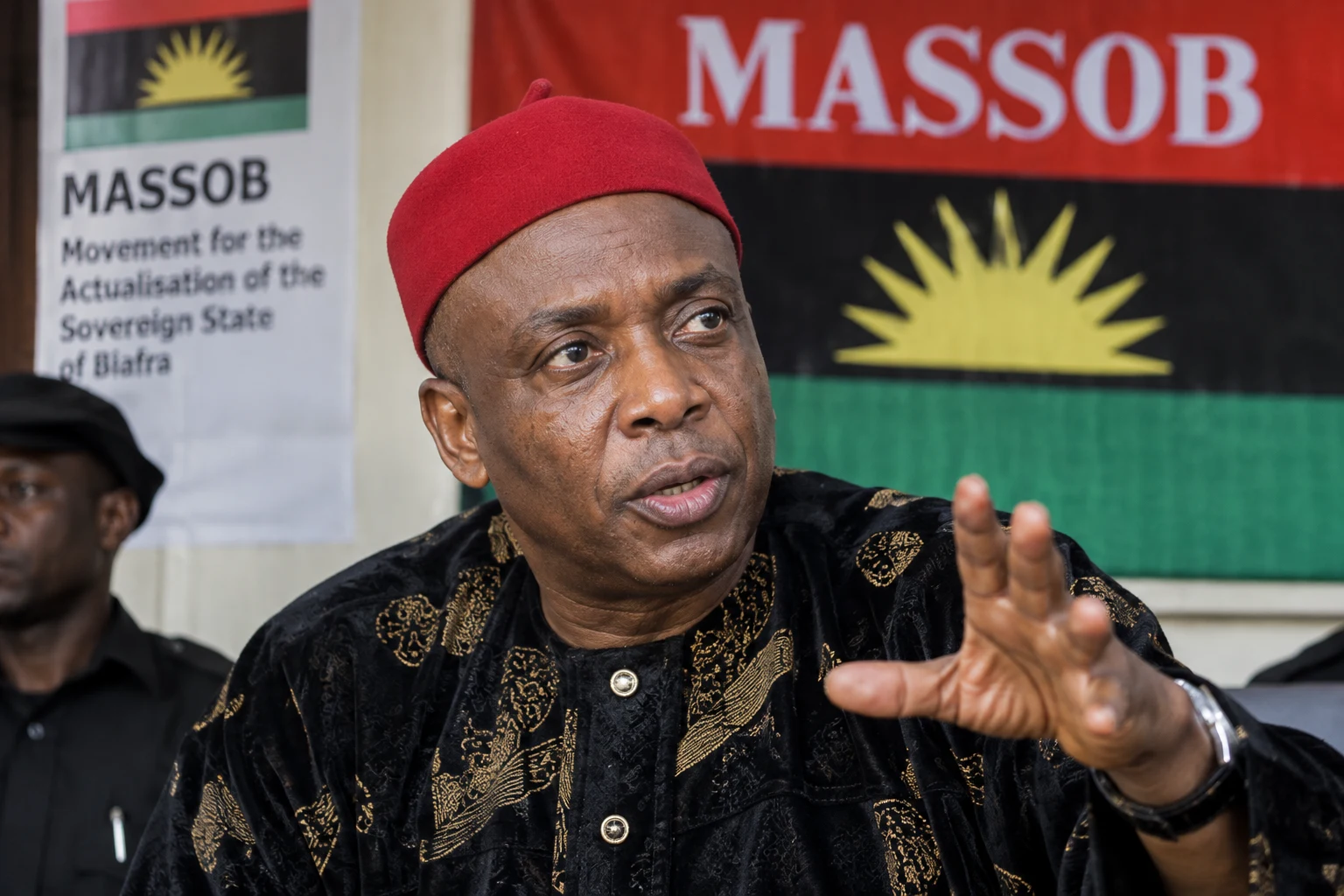
One of the most important was the Movement for the Actualisation of the Sovereign State of Biafra, MASSOB, which emerged in 1999 under Ralph Uwazuruike. MASSOB campaigned for the creation of a sovereign Biafran state and presented itself as a non-violent movement.
Human Rights Watch documented the organization as an Igbo self-determination movement and also documented repeated arrests, detention and killings of its members by Nigerian police. At the same time, Human Rights Watch recorded that the authorities accused MASSOB of some acts of disruption and political intimidation. In other words, even then, the government's description of the movement and the movement's own description of itself were not the same.
This history matters because it tells us something very simple.
The Biafran question did not begin with IPOB. It did not begin with Nnamdi Kanu.
And it certainly did not begin with terrorism.
There were already people in southeastern Nigeria openly demanding self-determination and facing state repression because of that political position.
Human Rights Watch documented cases of MASSOB members being arrested, detained and subjected to torture and other forms of ill treatment. It also documented restrictions on freedom of expression, association and peaceful assembly.
So by the time IPOB emerged in 2012, there was already a history behind the movement.
Then came a new generation.
Nnamdi Kanu and IPOB
IPOB emerged in 2012 and began campaigning for the restoration of an independent Biafran state. Its emergence brought a new level of visibility to the Biafran question, particularly among younger people who had been born after the civil war.
For this generation, Biafra was not something they had personally experienced as a country. They inherited it through family stories, historical accounts and the memories of people who had lived through the war.
They heard about relatives who had died.
They heard about displacement.
They heard about starvation.
They heard about what happened to Igbo people during and after the war.
And some of them began asking whether the political problems that produced the Biafran struggle had really disappeared.
IPOB gave some of those people an organized platform through which they could express their demand for self-determination.
Then Nnamdi Kanu was arrested in October 2015.
That arrest became a major turning point.
Across the Southeast, people began taking to the streets demanding his release and calling for Biafran self-determination.
Get new Omenala posts in your inbox.
Add any other topics you want to receive.
There were rallies.
There were marches.
There were remembrance events.
There were meetings.
There were public demonstrations.
And there were clashes.
This is where we need to be honest about the history.
It would be wrong to say that every single protest was perfectly peaceful. Amnesty International documented isolated incidents of violence by protesters, including the throwing of stones, burning of tyres and, in one incident, gunfire directed at police.
But the same investigation found that the gatherings it examined were largely peaceful and concluded that the response of Nigerian security forces involved excessive and, in some cases, unlawful lethal force.
A protest movement does not become a terrorist movement simply because some people within a protest commit crimes.
If someone commits murder, that person should be investigated.
If someone attacks a police officer, that person should be prosecuted.
If someone destroys property, that person should answer for the offence.
But those individual acts do not automatically transform every person at the demonstration into a terrorist.
And they certainly do not turn everyone who believes in Biafran self-determination into a terrorist. That is why the events of 2015 and 2016 deserve close attention.
What Happened to the Protesters?
Amnesty International investigated the crackdown on pro-Biafra protesters between August 2015 and August 2016.
It did not simply rely on social media posts.
Its researchers examined 87 videos, 122 photographs and 146 eyewitness testimonies, alongside other evidence.
Its conclusion was devastating.
Amnesty International reported that Nigerian security forces had killed at least 150 IPOB members and supporters during protests and other gatherings in that period. It documented the use of live ammunition, arbitrary arrests, torture and other forms of ill treatment.
The events of 30 May 2016 became one of the clearest examples.
It was Biafra Remembrance Day. People had gathered in Onitsha, Anambra State, to commemorate the declaration of the Republic of Biafra. According to Amnesty International, security forces had already raided homes and a church where some IPOB members were staying the night before. On the day itself, soldiers opened fire at several locations. Amnesty estimated that at least 60 people were killed over the two days and approximately 70 were injured. The organization said the actual number could have been higher because there had been no independent government investigation establishing the full number of victims. |
And this was not the only incident.
Earlier in February 2016, security forces had opened fire on an IPOB gathering at Aba National High School. Amnesty documented the incident and reported that people were killed and wounded. The organization also documented an incident in December 2015 in which soldiers opened fire on IPOB members celebrating a court decision concerning Kanu's release, killing five people according to Amnesty's investigation. |
These events are important because they happened before IPOB was formally proscribed as a terrorist organization.
That chronology cannot simply be removed. The government had not yet applied the terrorist label.
People were already being killed.
People were already being arrested.
People were already being accused.
And the confrontation between the Nigerian state and the Biafran movement was already becoming increasingly severe.
Amnesty's conclusion was that the military response to many of the gatherings was disproportionate and that the government had failed to properly investigate the killings.
Human Rights Watch was also documenting a broader pattern of abuses by Nigerian security forces during this period, including arbitrary arrests, detention, torture, forced disappearance and extrajudicial killings in different parts of the country.
So when we reach the point where IPOB is finally labelled a terrorist organization, we need to remember what came before it.
There was already a political movement.
There were already peaceful protesters.
There were already arrests.
There were already killings.
There was already deep distrust between the people in the Southeast and the Nigerian security establishment. And there were already competing narratives about what was happening.
The government saw a growing security threat. Many Biafran activists saw a government suppressing their political aspirations.
Human rights investigators documented serious abuses by security forces. And ordinary people were caught in the middle.
Then, in September 2017, the situation changed again.
The Nigerian government formally proscribed IPOB as a terrorist organization.
That is the point where the label became law. And that is where we need to stop and ask another question:
What exactly did the government use to justify that designation?
Because if we are going to call an organization a terrorist, we should examine the evidence.
Not just the label.
Not just the government's statement.
Not just what supporters say.
The evidence. This is where my next story begins!
Join the conversation
What stayed with you? Leave a thought or a question. Comments appear after approval.
Loading comments…