Before the British came. Before Nigeria existed. Before there was a Nigerian government, a Nigerian army, a Nigerian presidency or even the idea of Nigeria as one country, the Igbos already lived in organized societies.
Because Igbo did not begin to exist when the British arrived.
For centuries before colonial rule, Igbo communities had already developed their own societies, institutions, beliefs, economies and systems of government. They had ways of deciding who could lead, how disputes would be settled, how land would be shared, how children would be raised, how people would trade, how communities would defend themselves and how knowledge would be passed from one generation to another.
In other words, the Igbo already knew how to organize themselves.
Perhaps one of the first things we need to understand about Igbo history is that the Igbo did not build their society around one powerful king sitting in a palace and controlling everyone beneath him.
Politics
The political structure was different.
In many Igbo communities, authority was distributed among families, villages, elders, titled people, age grades and community assemblies. The exact structure differed from one community to another, because Igbo society was never one centralized kingdom. What happened in Nri was not necessarily the same as what happened in Arochukwu, Onitsha, Nsukka, Ngwa, Abiriba, Afikpo or other Igbo communities.
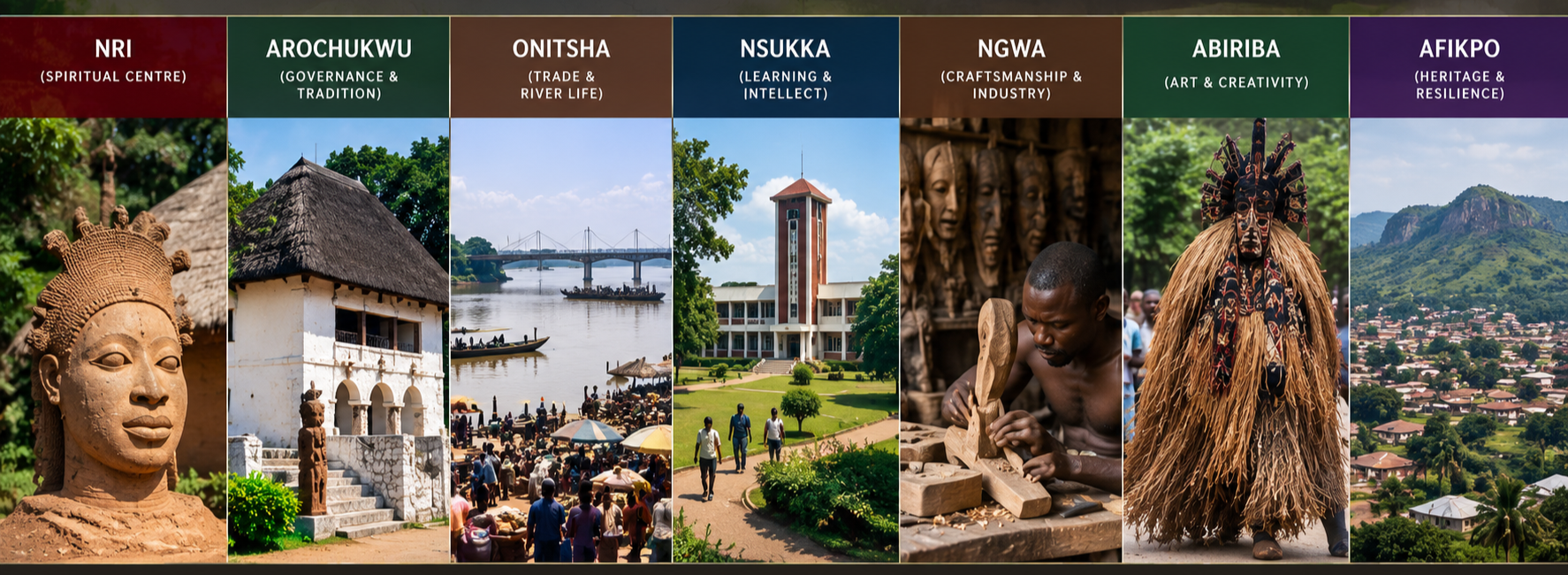
This is important because the absence of one central Igbo king has sometimes been wrongly interpreted to mean that the Igbo had no political organization.
They did.
They simply organized political power differently.
For example, the ụmụnna refers broadly to the members of a patrilineal lineage, people who trace their descent through a common male ancestor. The lineage was not just a family tree that people mentioned during introductions. It was an important social institution.
Your relationship with your ụmụnna could determine your responsibilities to the community, your connection to family land, your obligations to relatives and your participation in important decisions.
Then there were the village assemblies.
In many communities, important matters were discussed collectively. People could gather to deliberate on disputes, community projects, offences, land matters and other issues affecting the village.
This meant that political authority was not simply something that belonged to one man.
The community itself had a voice.
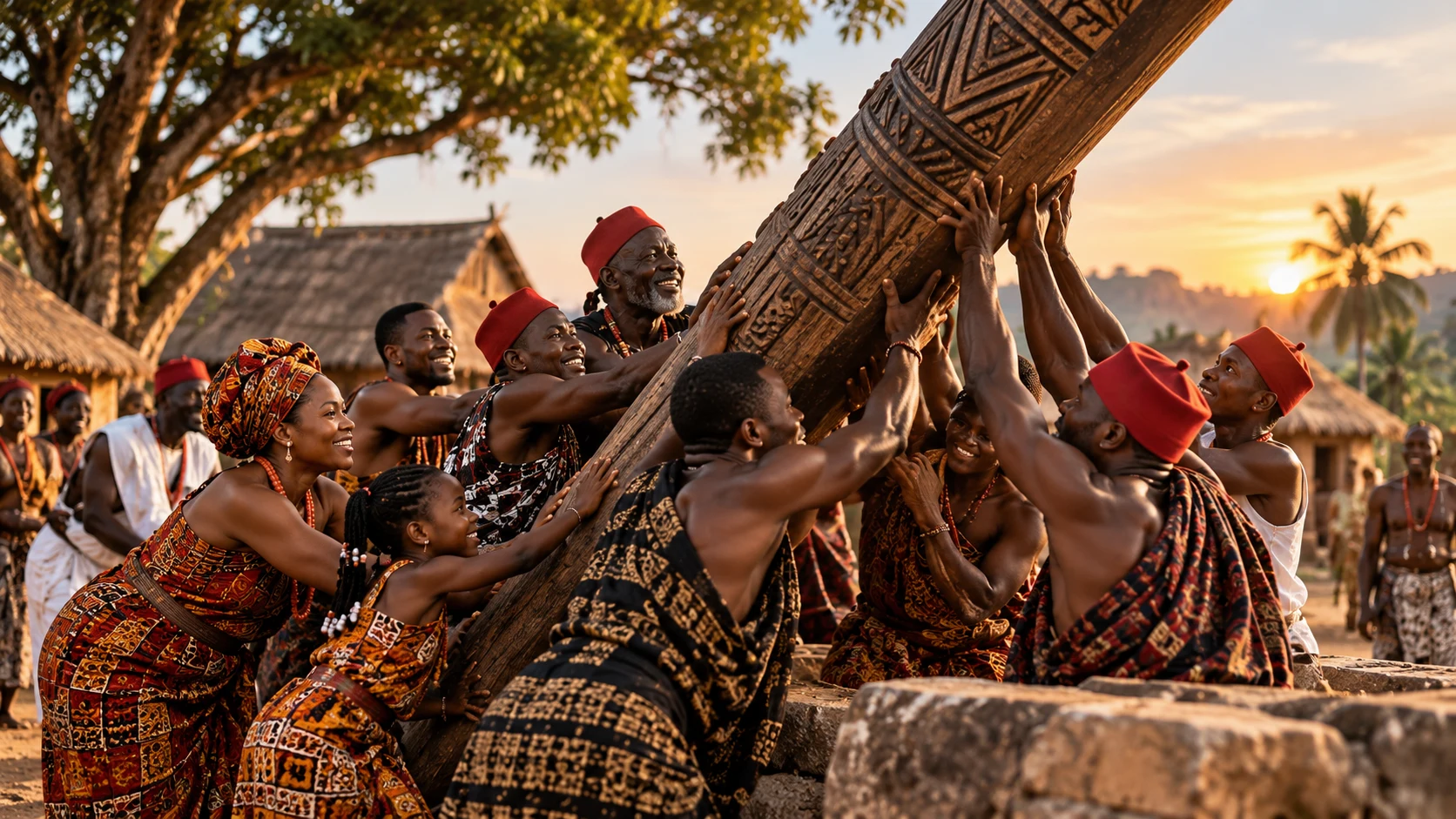
This is one of the ideas captured by the Igbo concept of igwebuike, the strength that comes from people coming together. Although the term has broader philosophical meanings and should not be reduced to a political slogan, it reflects something important about Igbo social organization: collective action mattered.
Age Grades
The Igbo also had age grades.
An age grade was a group of people within a particular age range who shared responsibilities within their community. These groups could perform practical functions such as maintaining roads, clearing communal spaces, organizing community activities and contributing to the security and development of the village.
For the young person growing up in such a society, community was not something abstract.
You belonged to a family. Your family belonged to a lineage. Your lineage belonged to a village.
And your village was connected to other villages through trade, marriage, kinship, migration and other relationships.
Your identity was therefore connected to other people.
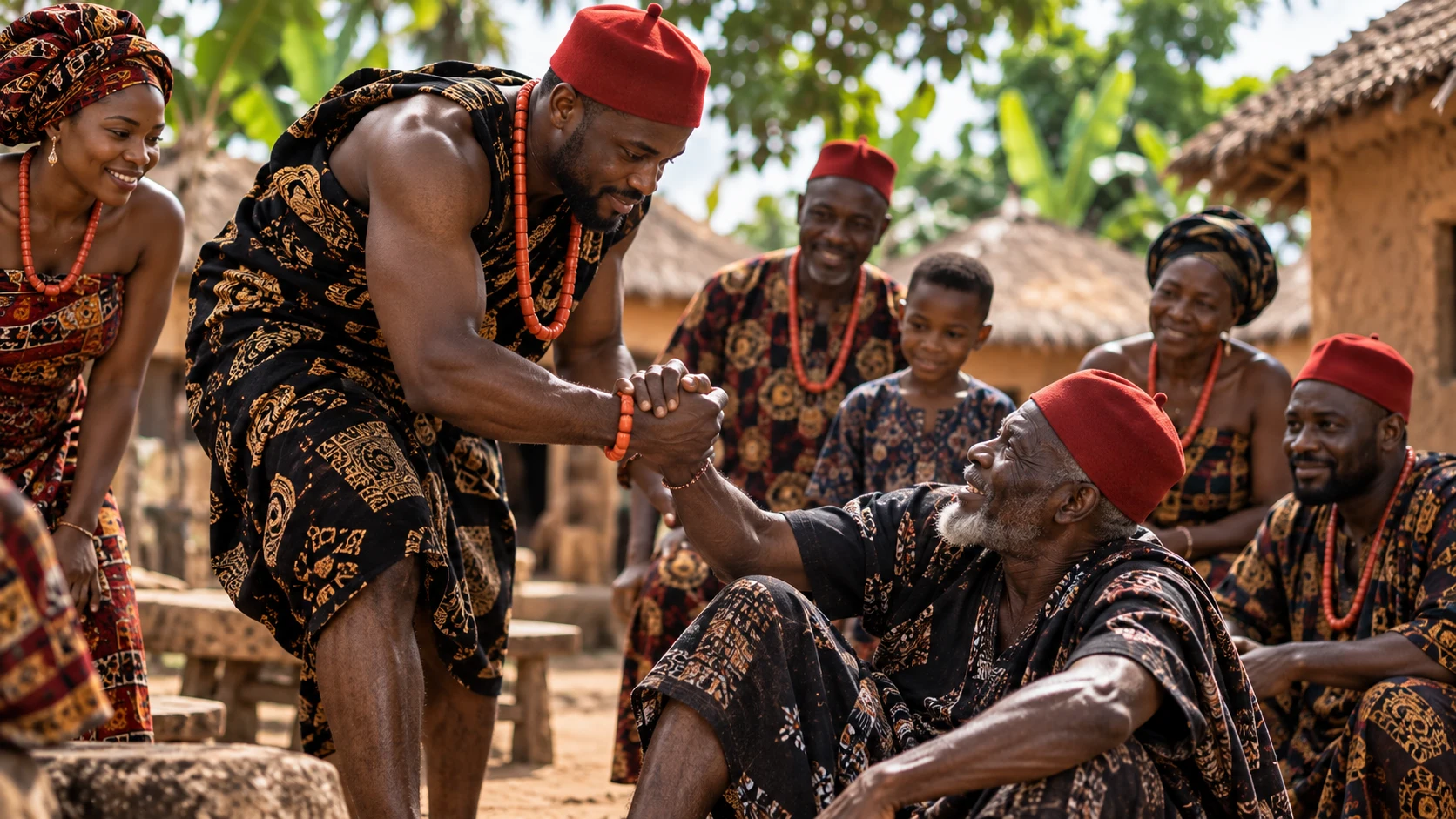
This is also why the Igbo concept of onye aghana nwanne ya is important to understanding the social philosophy of the people. Literally, it expresses the idea that one should not abandon one's fellow person or relative. It reflects the importance placed on mutual responsibility and communal relationships.
But we should not romanticize this society.
Precolonial Igbo communities were not perfect societies where everyone lived peacefully, and everyone had equal power.
There were conflicts.
There were social hierarchies.
There were disputes over land and wealth.
There were wars between communities.
There were forms of slavery and systems of servitude.
There were also differences in status, gender and social position.
The point is not to pretend that everything before colonialism was perfect. The point is to understand that the Igbo already had a functioning civilization with its own strengths and weaknesses.
They did not need the British to first teach them how society works.
They already had law.
They already had authority.
They already had commerce.
They already had education.
They already had religion.
They already had technology.
They already had art.
They already had systems for transferring knowledge.
One of the strongest examples is trade.
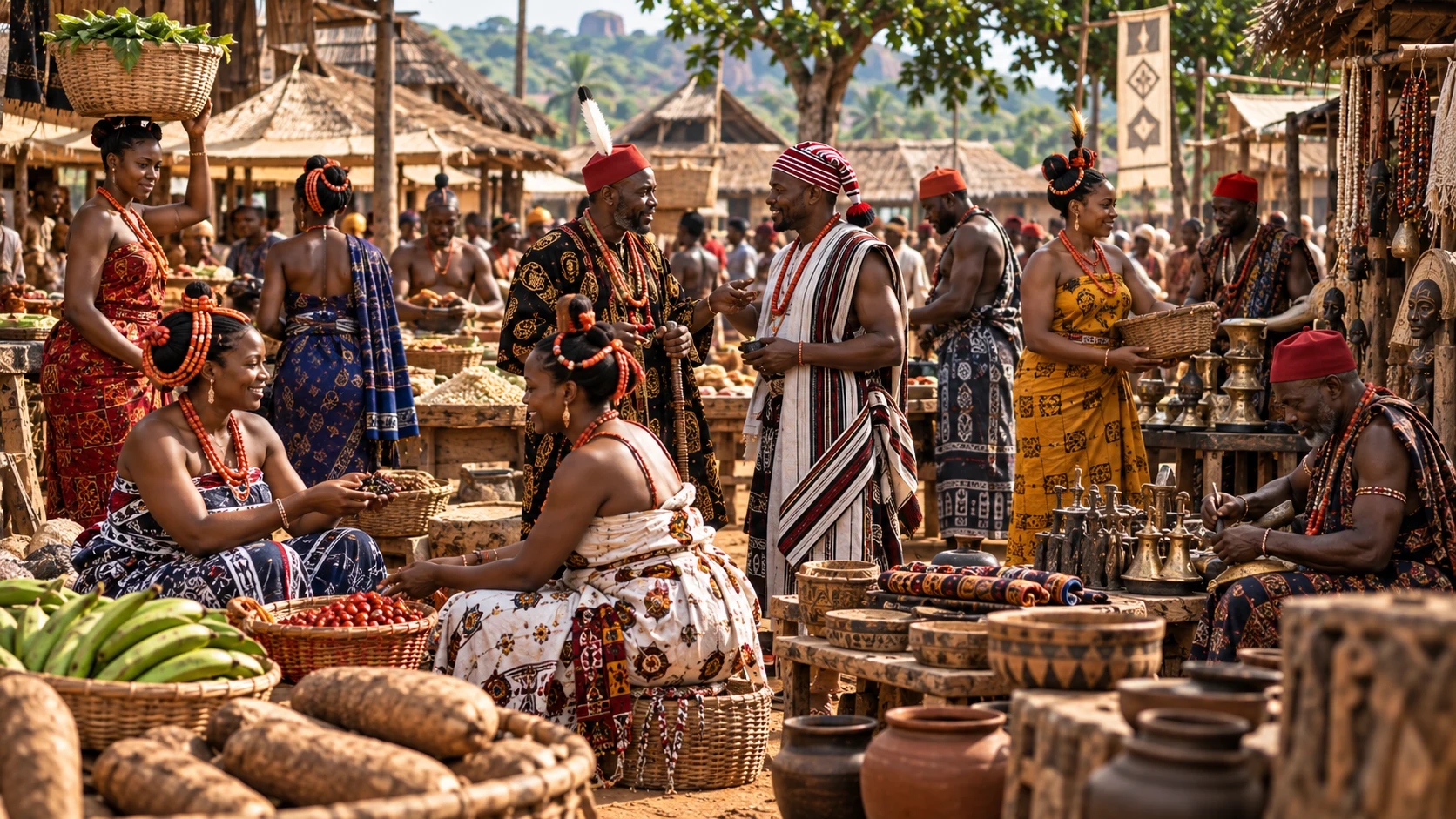
Precolonial Igbo society was deeply commercial. Markets were central to economic life, and trading relationships connected communities across southeastern Nigeria and beyond.
Get new Omenala posts in your inbox.
Add any other topics you want to receive.
People traded agricultural products, livestock, salt, cloth, pottery, metal products and other goods. Different communities developed different economic specialties, and professional traders established networks that could extend far beyond their immediate villages.
The Aro are one particularly important example.
The Aro developed extensive commercial networks across southeastern Nigeria and became influential in regional trade. Their activities connected different communities economically and politically, while Arochukwu became an important centre of religious and commercial influence.
So when we talk about the Igbo before colonialism, we are not talking about isolated villages where everybody simply farmed for themselves.
We are talking about communities connected by markets, trade routes, migration and social relationships.
Education
And then there is Igbo-Ukwu.
This is one of the places where archaeology becomes extremely important to the Igbo story.
Archaeological discoveries at Igbo-Ukwu revealed sophisticated bronze and copper-alloy objects produced many centuries ago. The objects include vessels, ornaments and ritual materials displaying a remarkable level of technical and artistic skill.
Think about what that means.
Long before British colonial administrators arrived in southeastern Nigeria, people living in the region were already working with metals at a very high level of craftsmanship.
They were designing objects.
They were casting metal.
They were creating intricate forms.
They were developing artistic traditions.
And they were doing all of this within a society that had its own economic and cultural systems.
This is why the history of Igbo-Ukwu matters beyond archaeology.
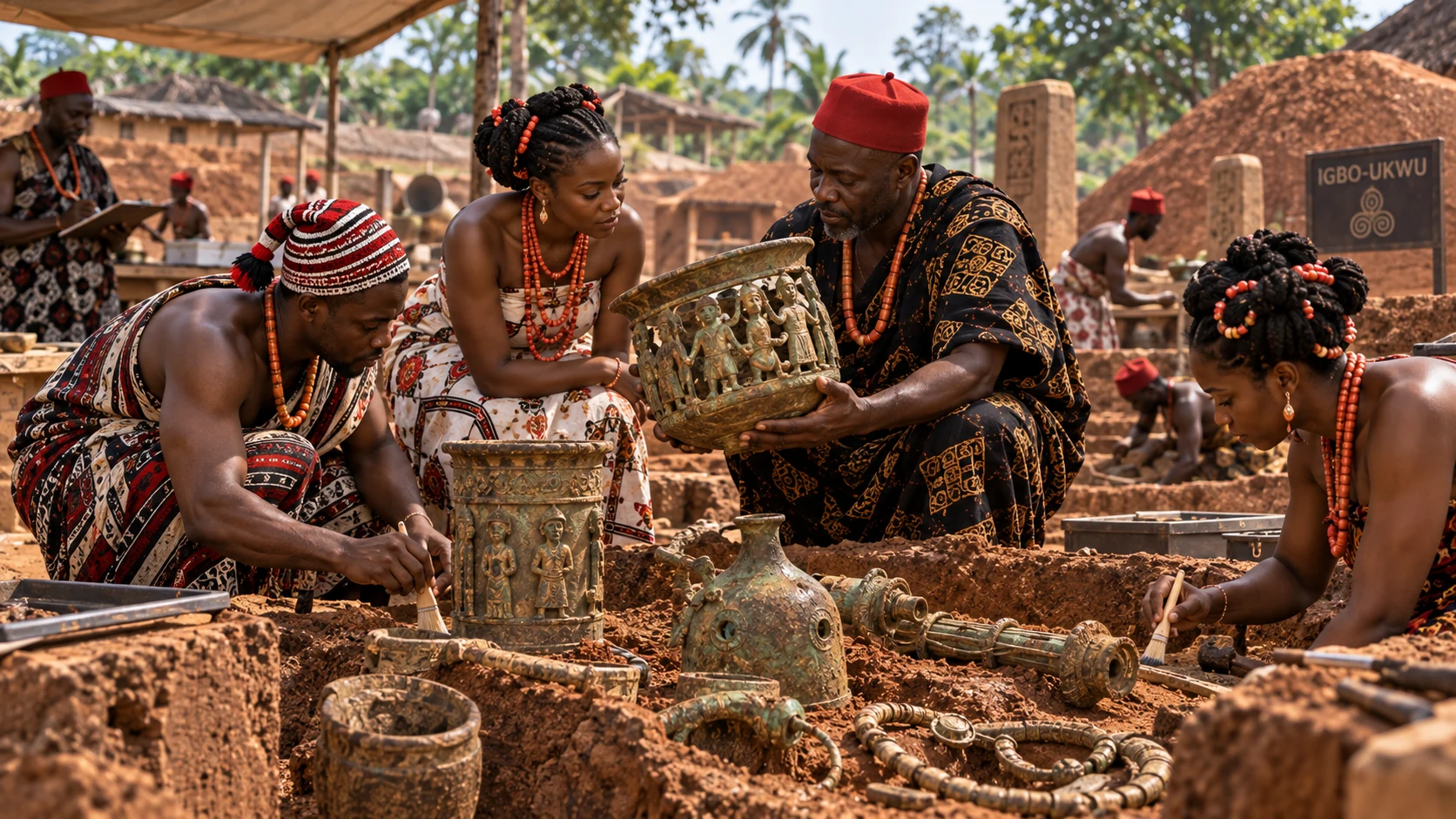
It challenges the old colonial idea that Africa was simply a continent waiting for Europeans to introduce civilization.
The Igbo did not wait for Britain to become a people.
They did not wait for Britain to develop an economy.
They did not wait for Britain to develop political institutions.
They did not wait for Britain to develop a culture.
They already had one.
And culture was not something that existed only in objects.
It existed in language.
It existed in names.
It existed in proverbs.
It existed in marriage traditions.
It existed in festivals.
It existed in music.
It existed in storytelling.
It existed in titles and institutions.
It existed in the way people related to their ancestors, their families and their communities.
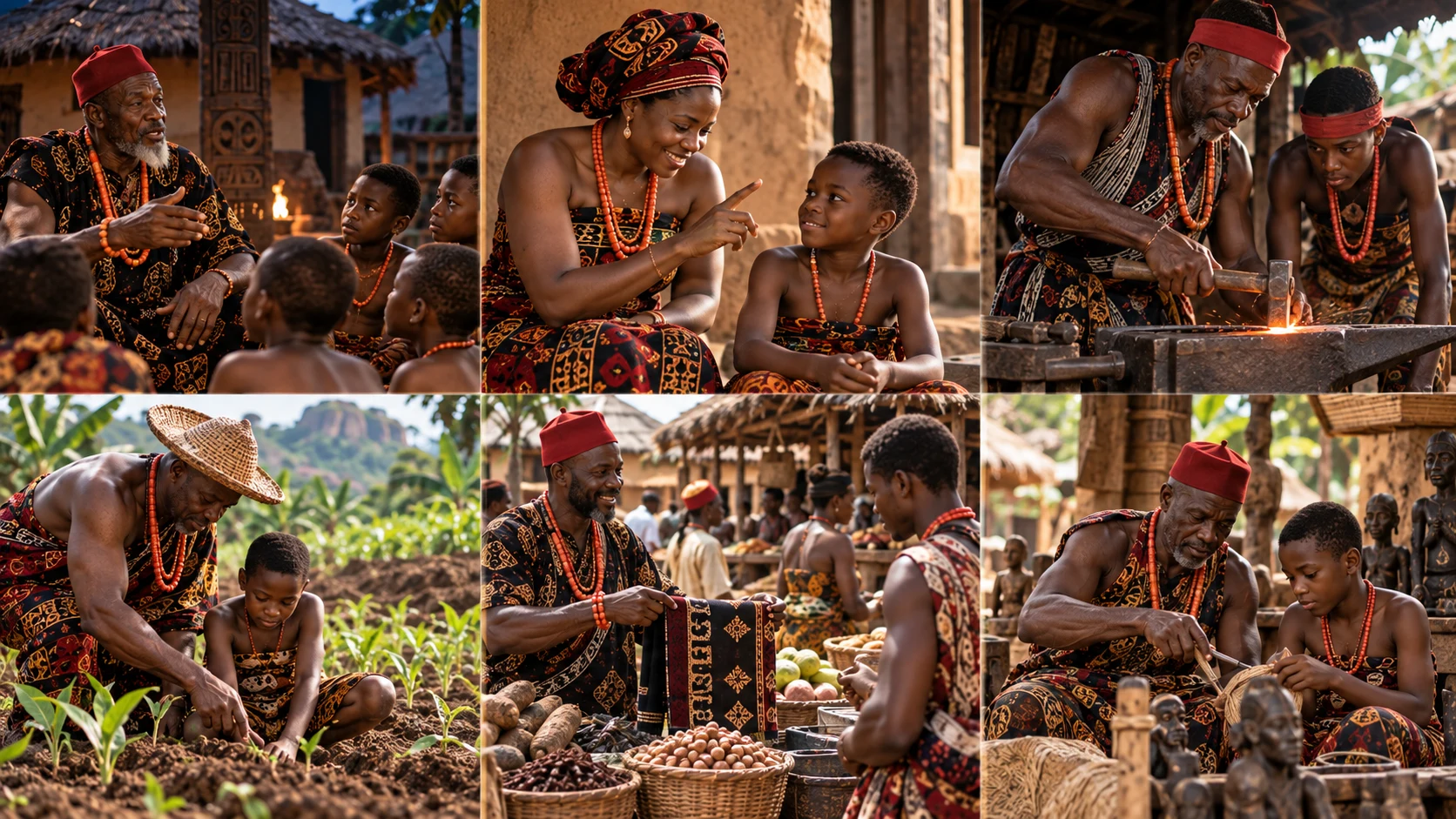
Knowledge was passed from one generation to another.
An elder could teach a younger person through a story.
A parent could teach a child through a proverb.
A master could teach an apprentice through years of practical work.
A farmer could pass agricultural knowledge to his children.
A blacksmith could pass his craft to the next generation.
A trader could teach a younger person how to understand markets and negotiate.
This was education.
It simply was not education in the form of a British classroom.
Religion
The Igbo also had their own religious worldview.
Before Christian missionaries arrived, Igbo communities had established beliefs concerning Chukwu, Ala, ancestors, personal destiny and other spiritual forces. Again, these beliefs were not completely identical across every Igbo community, because Igbo culture was diverse.
But spirituality was deeply woven into everyday life.
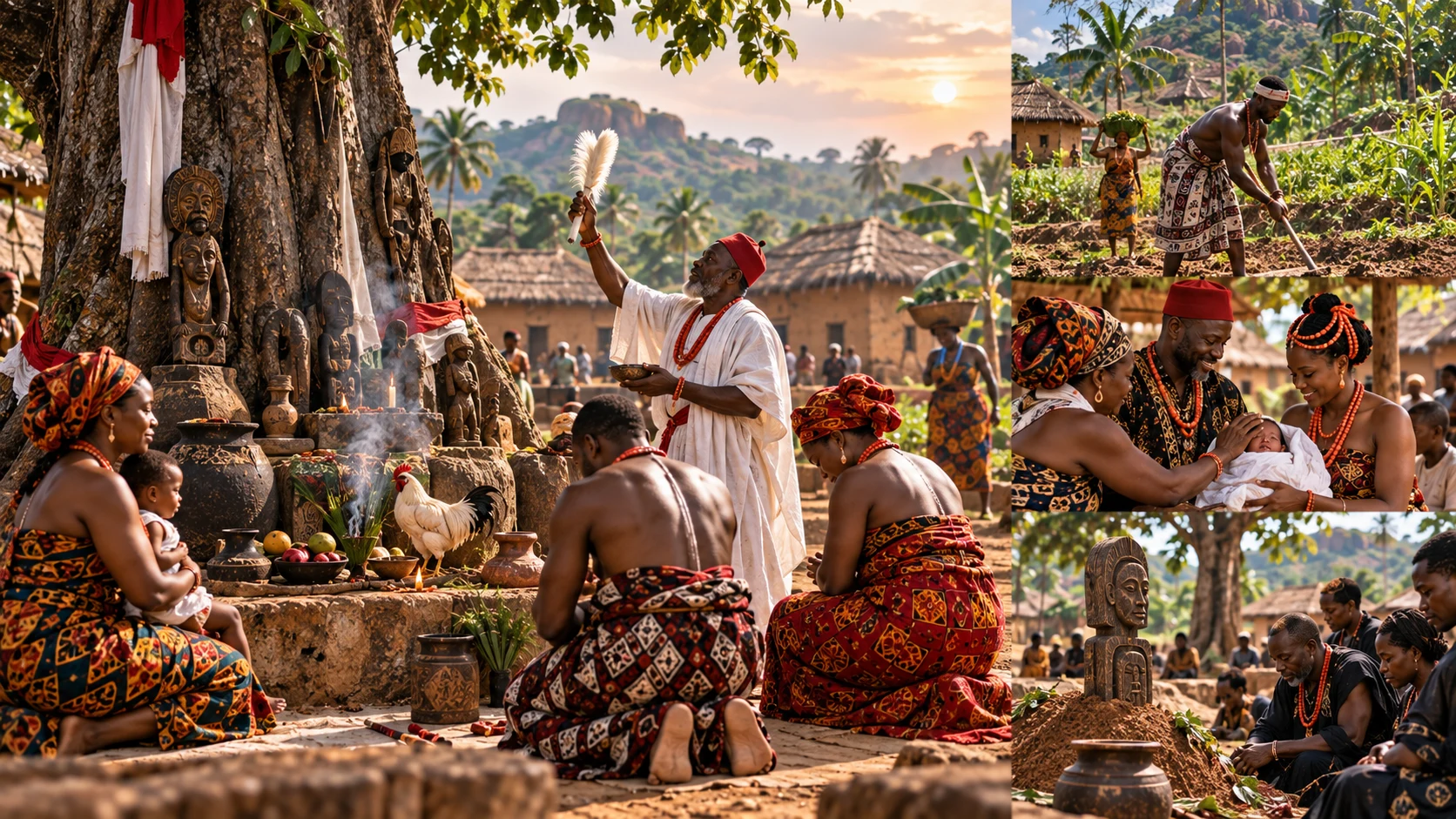
Religion was connected to morality, family, land, agriculture, marriage, birth, death and community life. The sacred and the ordinary were not always separated in the way modern people may separate religion from everyday affairs.
And this is where the colonial masters captured the Igbos.
Debunking Myth
When missionaries eventually arrived with Christianity, they were not introducing the idea of God to people who had never thought about God. They were introducing a new religious tradition to a people who already had their own religious beliefs, spiritual practices and understanding of the world.
Colonialism did not create the Igbo.
It did not give the Igbo their first political system.
It did not give them their first economy.
It did not give them their first culture.
It did not give them their first religion.
It did not give them their first system of knowledge.
The colonial masters encountered people who already had all of these things.
They were not introducing the government to people who had never organized themselves. They were entering communities that already had systems of leadership, authority, justice and decision-making.
They were not introducing commerce to people who had never traded. They were entering existing markets and commercial networks where people were already producing, exchanging and selling goods.
They were not introducing the Igbo to knowledge itself. They were introducing a different system of formal education into a society that already had its own ways of teaching, learning and passing knowledge from one generation to another.
Join the conversation
What stayed with you? Leave a thought or a question. Comments appear after approval.
Loading comments…